The cost of ignoring it
Access is frequently one of the largest cost items in facade work, and the choice of method changes the price more than almost any other decision. Defaulting to full scaffold for defects spread thinly across an elevation pays for access to areas that need no work, and deferring works because of the access cost allows the underlying defects to progress.
Access selection
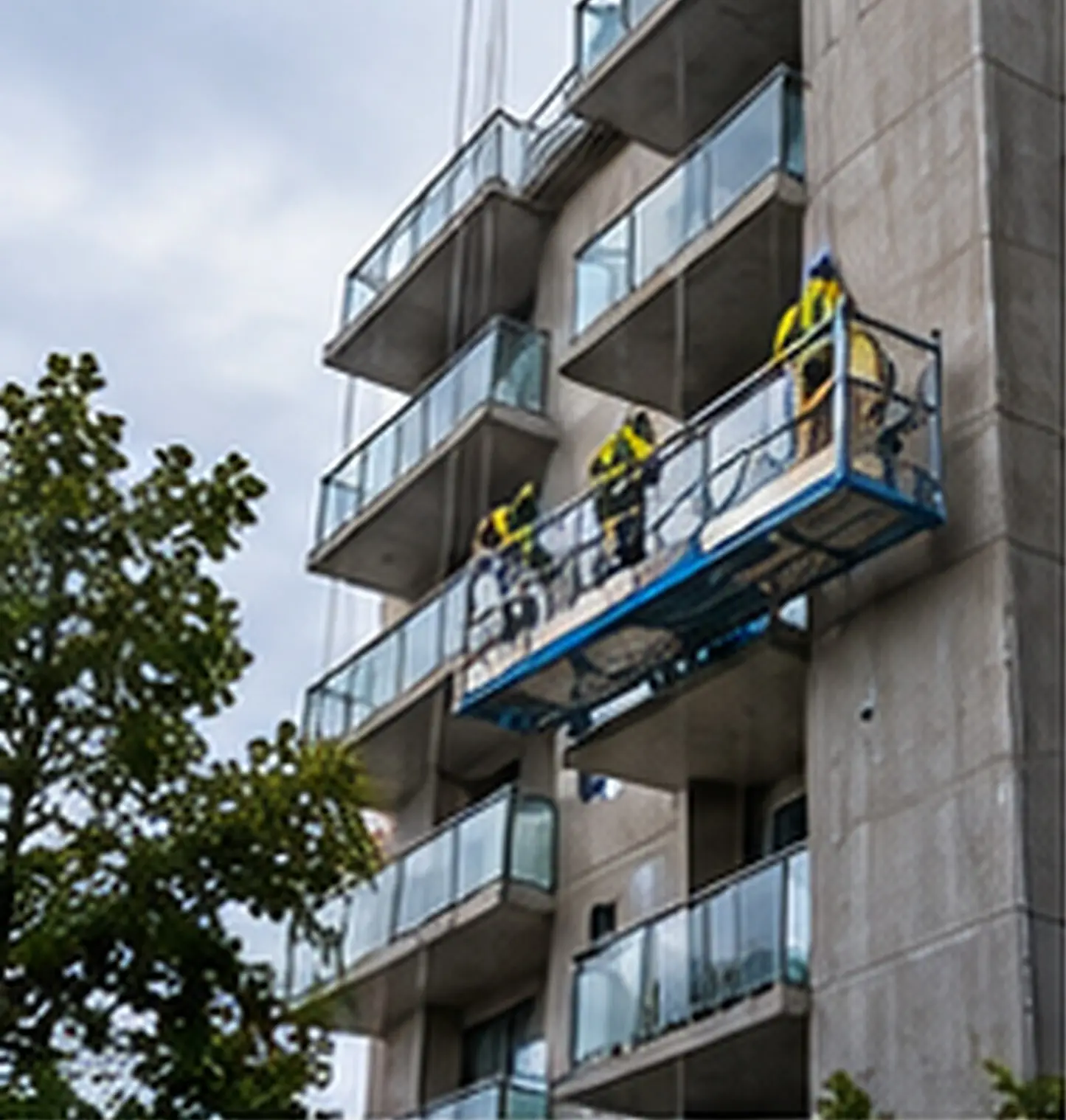
Some remedial work is difficult to reach, including high facades, atriums, lift shafts, under-bridge soffits and confined plant zones. The access decision — rope, EWP, mast climber, swing stage or scaffold — often determines project economics to a greater degree than the repair itself. Access is treated as an engineered, costed line item rather than a default selection.
Access scoping methodology
- Task density mapping — the defect schedule establishes how much work exists per elevation and zone
- Method comparison — access options costed against duration, disruption and safety requirements, presented side by side in the proposal
- Engineering — anchor design and certification, load assessments for suspended equipment, and exclusion zone planning
- Safety systems — SWMS per method, rescue plans for rope work, and permits and notifications administered by us
Typical applications
Engineered access is applied to facade inspection and survey programs, sealant and joint replacement campaigns, isolated concrete repairs at height, gutter and roof plant zones, glazing and fixing checks, and post-storm make-safe works.